EU Approved Compact Excavators: The Guide to Compliance
EU Approved Compact Excavators: The Guide to Compliance
Blog Article
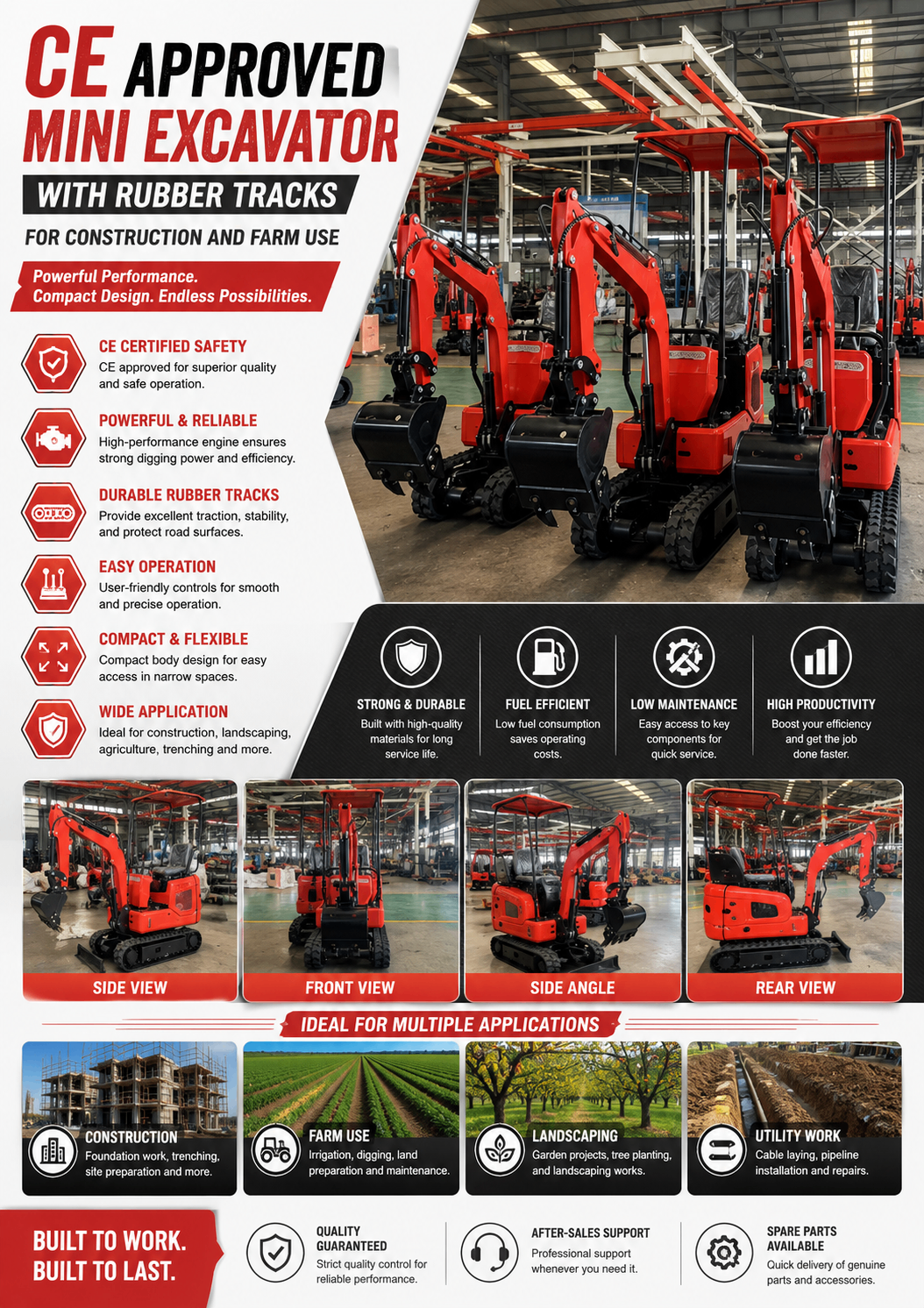
Ensuring your compact digger meets CE approval requirements is crucial for operation within the EU. Our handbook covers the key aspects of European certification for small excavators, such as regulations related to operator protection, construction equipment assessment, and paperwork. Knowing the requirements enables operators to correctly operate their machinery and prevent possible legal action.
Steel Track Mini Excavators: Outstanding Grip for Difficult Terrain
Mini machines equipped with composite tracks are changing how contractors work with projects in uneven situations. Unlike traditional tire-equipped models, these adaptable machines offer exceptional grip on unstable surfaces like sand, snow, and inclined hills. This greater balance allows operators to finish projects safely and productively, lessening downtime and increasing output. The flexible nature of rubber tracks also reduces ground impact, protecting delicate surfaces and reducing site impact.
Compact Excavators: Impressive Capability in Tight Work Areas
These robust miniature excavators deliver a considerable solution for tasks where conventional equipment simply maneuver. Their smaller size enables access to restricted areas, including basement infrastructure or between existing structures. Despite their scale, they possess impressive excavating power and finesse, helping them suitable for a varied scope of demolition uses. Ultimately, mini excavators represent a smart tool for builders facing the problems of restricted areas.
Mini Excavators for Properties: Versatility and Productivity in Crop Tasks
Modern farming operations often require tools that can handle a variety of demanding jobs. Compact diggers are quickly becoming invaluable assets for producers, offering exceptional versatility and productivity across a numerous array of agricultural duties. From trenching for irrigation networks and drainage to shifting soil for building barriers or terraces , these pieces of equipment provide a powerful solution. They also excel at clearing land for seeding , grading land, and managing resources with simplicity . Their reduced footprint allows them to work in tight locations that larger equipment simply cannot reach .
- Excavating for Irrigation
- Moving Soil
- Clearing Land for Planting
Selecting the Ideal Mini Digger in Construction vs. Agricultural Applications
When considering a mini digger , it's essential to appreciate the crucial variations between building projects and rural tasks . Building sites often necessitate increased strength , accuracy , and the capacity to function in tight areas . As a result, a powerful model with a extensive selection of implements might be ideal . On the other hand, agricultural land frequently involve minimal digging distances , frequent terrain leveling , and the requirement for small equipment to move through pastures . In conclusion, careful assessment of the anticipated tasks is paramount for securing the right selection .
- Consider excavation depths .
- Determine the location limitations .
- Consider the necessary implements.
- Factor in hauling challenges .
{CE Marking & Mini Compact Equipment: What Operators Must to Know
Ensuring your {mini excavator is meets the requirements of relevant European standards is crucial, and that's where {CE certification comes with. This indicator demonstrates that the equipment has been assessed and meets safety requirements, allowing unrestricted sale within the European Economic Area . {For owners of these machines, Mini hydraulic excavator understanding CE certification is vital . It isn't simply about having a mark on the excavator ; it represents a process of design and functionality.
- Ensure the visibility of the CE label .
- Review the DoC – this details the guidelines the excavator meets.
- Bear in mind that CE certification is the manufacturer’s responsibility – even operators must be cognizant of its significance.